What is an AI-Managed Company (and How It Differs from Using AI)
· CompaniesAutomation
An AI-managed company is not one that "uses AI": it is one where agents execute processes and people direct. The distinction, the five defining traits, and why it's a competitive advantage, not just savings.
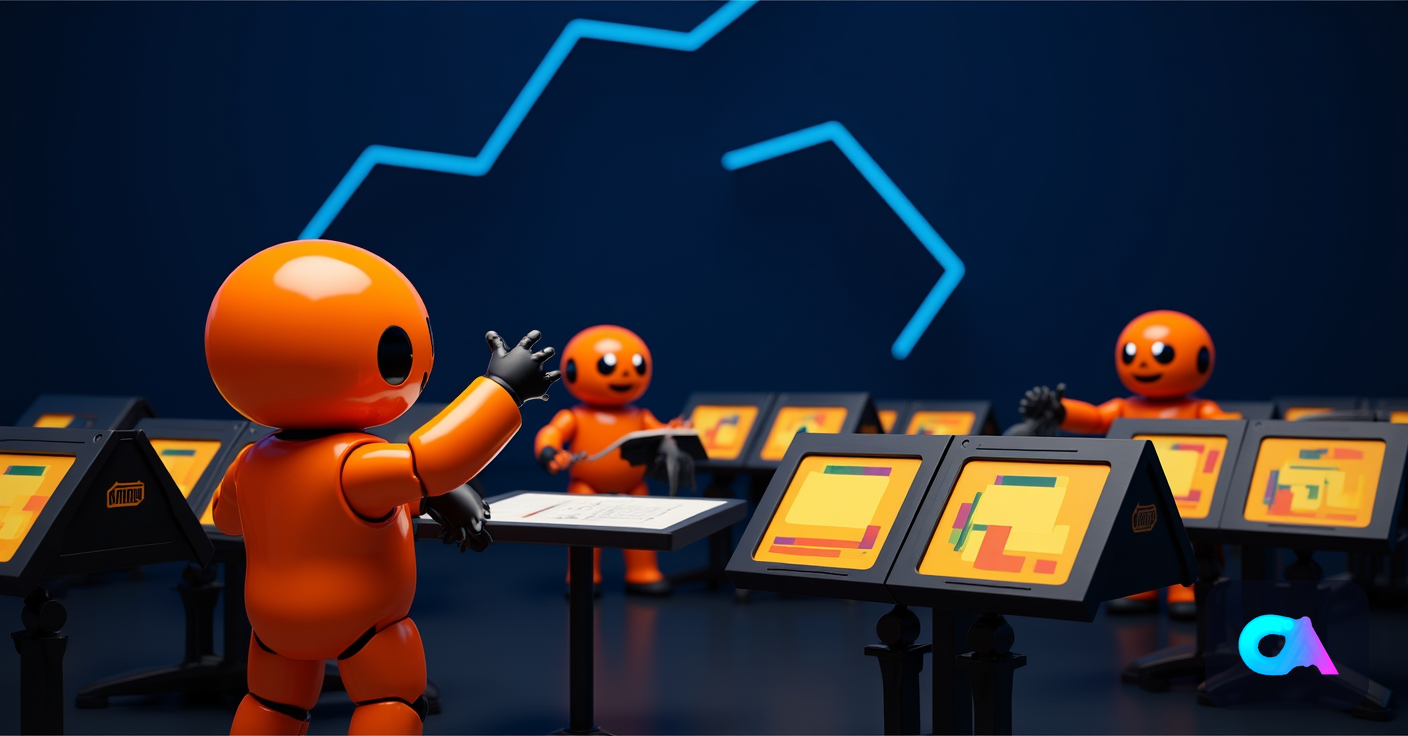
An AI-managed company is an organization where AI agents execute repetitive and operational work autonomously, while people focus on directing, deciding, and handling exceptions. It is not a company that "uses AI"—almost all do so already with a chatbot or a copilot—but one where AI is what operates the processes, not just a tool that an employee opens from time to time.
The distinction matters because it marks the difference between adding AI as a cosmetic layer and redesigning how the business works. The former improves individual tasks; the latter changes the cost structure and the speed of the company.
How is it different from a company that "uses AI"?
The difference lies in who executes the process. In a company that uses AI, a human does the work and AI assists them: the salesperson drafts the email with the help of a model, the analyst summarizes a report faster. The process still depends on the person. In an AI-managed company, the agent executes the process from start to finish and the person supervises: the agent qualifies the lead, responds, schedules, and only escalates to a human when there is something that requires a person's decision.
The first model saves minutes per task. The second removes the task from the person's plate. That is the whole difference, and it is massive when multiplied by thousands of operations per month.
What characterizes an AI-managed company?
There are five traits that distinguish it from a traditional company with AI tools layered on top:
- Processes operate on their own. Sales, operations, and support have agents that execute the standard flow without human intervention in the day-to-day.
- People direct, they don't execute. The team shifts from "doing tasks" to "supervising systems and handling exceptions," which is where human judgment is valuable.
- Agents are connected to real systems. They read and operate the ERP, the CRM, and databases—they don't live in a separate tab.
- Every process has business metrics. Hours saved, cost per operation, cycle time: it is measured, not intuited.
- The operation is traceable. Every action taken by the agent is recorded, a requirement for auditing, compliance, and trusting the system.
Why is it a competitive advantage and not just savings?
Because it changes the relationship between growth and costs. In a traditional company, serving twice as many customers requires approximately twice as many people in operations and support. In an AI-managed company, a large part of that work is absorbed by agents, so you can scale the business without scaling the workforce at the same rate. That isn't "spending less," it's being able to grow faster with the same structure—and that is where market winners are decided.
The destination is what we describe in what is an AI-First company: an operation where the team leads and AI executes. "AI-managed" is the result; "AI-First" is the way to design it from the start.
How do you become one?
Not all at once nor by buying a platform. The serious path begins with a diagnostic that identifies where the company loses the most hours and margin in manual work, continues by redesigning those processes and deploying specific agents over 2-3 of them, and advances through phases where each one is paid for with the savings from the previous one. We detail this in the guide on how to implement AI in your company in 90 days. The important thing: you start with the most expensive process, not the flashiest technology.
Frequently Asked Questions
Is this only for large companies?
On the contrary: SMEs usually get the return sooner because they have fewer layers and less internal bureaucracy slowing down the change. A business of 20-50 people can have agents operating key processes in weeks, without the structural cost of a large corporation.
Are jobs lost?
They are transformed more than they are lost. The team stops doing repetitive tasks and moves to supervising systems, handling complex cases, and attending to what truly needs a person. In practice, companies that do it well grow and reassign the team to higher-value work, rather than reducing it.
How long does it take to notice the effect?
The first automated process is usually operating in 4-8 weeks, and its impact is measured against the baseline from the first month. The shift from a "company that uses AI" to an "AI-managed company" is progressive: it is won process by process, not in a big bang.
What is the difference compared to just automating?
Classic automation covers what has fixed rules; an AI-managed company adds agents that handle judgment and the exceptions that automation cannot. We explain when to use each in AI agent vs RPA vs automation.