What is AI Algorithmic Trading (Technical Disclosure, Not Advice)
· Rubén García
AI algorithmic trading uses systems that analyze data, recognize patterns, and execute with discipline. How it differs from classic algorithmic trading, where it adds real value, and why overfitting ruins most systems.
Disclaimer: This article is for technical and business educational purposes regarding how AI trading systems are built. It is not financial advice or an investment recommendation. Trading in financial markets carries a risk of loss.
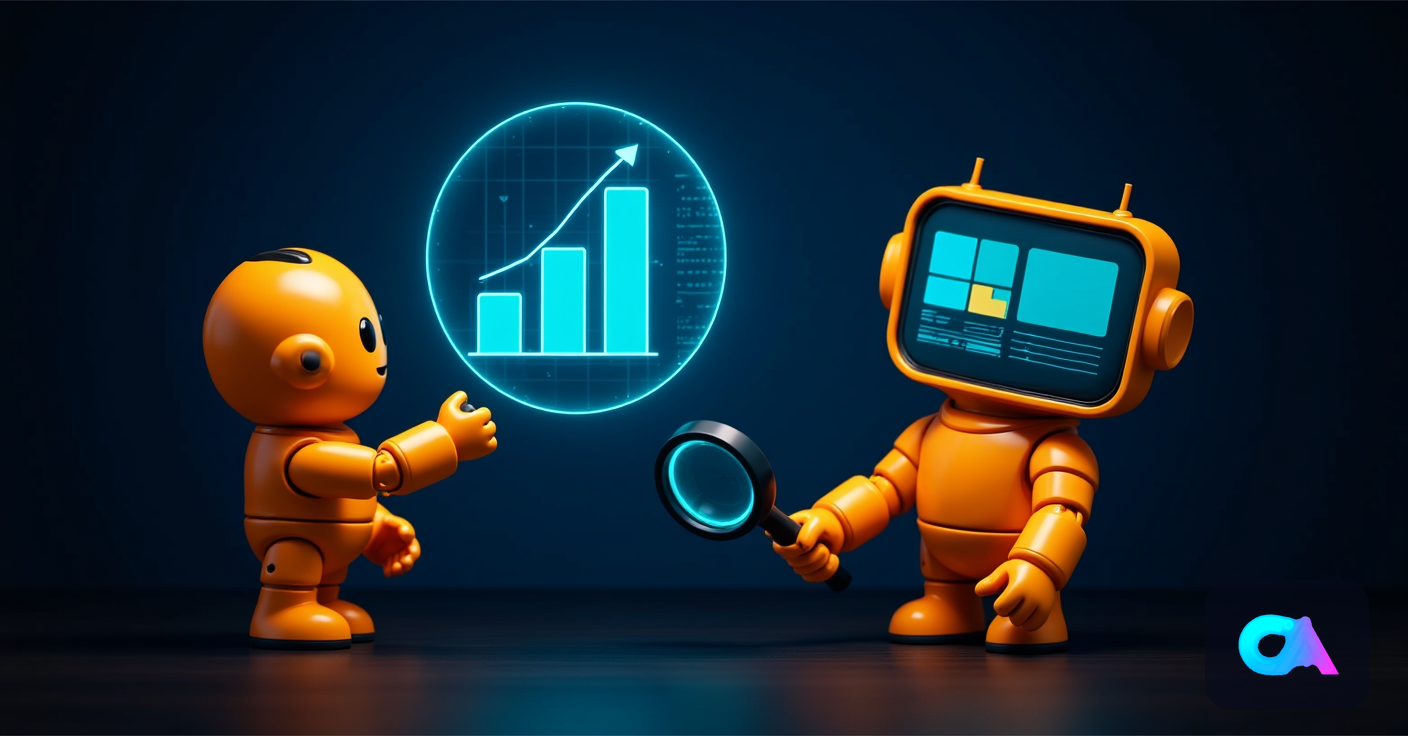
AI algorithmic trading is the use of automated systems that execute market operations following rules and models, incorporating artificial intelligence to analyze data, recognize patterns, and adapt decisions. The difference from classic algorithmic trading: traditional algorithms follow fixed rules programmed by a human, while AI adds the ability to find patterns in large volumes of data and adjust to conditions that were not explicitly programmed.
It is worth clearing up a misunderstanding from the start: AI in trading is not a crystal ball that predicts the market. It is an engineering tool for processing information, validating hypotheses, and executing with discipline—the value lies in the process, not in a supposed ability to guess the future.
How does it differ from traditional algorithmic trading?
In how decisions are generated and adjusted. Classic algorithmic trading executes a strategy with explicit rules: "if these two averages cross, buy." It is transparent and deterministic. AI is applied at different layers: data analysis (processing news, on-chain data, volumes, or historical series at a scale a human cannot reach), pattern recognition (detecting statistical structures in data), and decision copilots (systems that synthesize multiple signals to produce a reading of the context). It does not replace the strategy's logic; it feeds it with more processed information.
Where does AI provide real value in a trading system?
Ordered from most mature to most experimental:
- Data processing at scale. Ingesting and cross-referencing disparate sources—prices, volume, on-chain data, news—to build the context on which the system decides.
- Strategy validation (backtesting). Testing a hypothesis against historical data with statistical rigor, avoiding the biases that make a strategy look good in the past but fail in live trading.
- Analysis copilots. Systems that daily synthesize relevant signals and produce a reading of the market bias, with a record of hits to measure if they work.
- Disciplined execution. Automating execution to eliminate the emotional factor, the area where human discretionary trading fails most often.
The critical point: every one of these layers must be validated with data, not intuition. A system that does not record its performance and is not measured against a baseline is an opinion with automated steps, not a serious system.
The biggest mistake: confusing overfitting with strategy
The error that ruins most AI trading systems is overfitting: building a model that fits the past perfectly precisely because it has adapted to the noise of those specific data points, and therefore fails as soon as it faces new data. The more powerful the AI, the easier it is to fall into this—the model "memorizes" history instead of capturing something real. That is why robust validation (testing on data the model has never seen, walk-forward analysis, statistical honesty) matters more than the model's sophistication. In trading, a simple and well-validated system beats a complex and overfitted one almost every time.
The connection with business automation
An AI trading system is, at its core, the same type of engineering we apply to business process automation: agents that ingest data from multiple sources, process it with criteria, execute actions, and record everything to be auditable. The disciplines that make an accounts payable agent reliable—connection to real data, traceability, validation against a baseline—are the same ones that make a market copilot reliable. It is one of the verticals where we develop systems, along with finance department automation.
Frequently Asked Questions
Can AI predict the market?
Not reliably, and be wary of anyone who promises it. AI processes information and recognizes statistical patterns, which helps build disciplined and well-informed systems, but markets have an irreducible component of uncertainty. The value lies in the process and risk management, not in prediction.
Do I need to know how to program for AI algorithmic trading?
To build your own system, technical ability or a team that has it is required. The complexity is not so much in writing code as it is in rigorous statistical validation, which is where a serious system separates itself from an overfitted one.
Is it the same as a "trading bot" sold on the internet?
No. Most commercial bots promising guaranteed returns are, at best, simple overfitted strategies, and at worst, a fraud. A serious system is transparent about its method and its real performance, including losses.
Is this investment advice?
No. This content is technical education on how these systems are built. Any investment decision is the responsibility of whoever makes it and should be consulted with a regulated professional.