AI Radar for Companies — Tuesday, October 13, 2026
· CompaniesAutomation
A cyberattack sets connected refrigerators in hundreds of French supermarkets to 50 °C; Amazon negotiates to buy Decart for about $7B, and Google forecasts sales from a query.
Attackers pushed the connected fridges in hundreds of French supermarkets up to 50 °C by exploiting refrigeration equipment running out-of-date software: the risk in automating lies in the machines nobody checks. Amazon is in talks to pay about $7 billion for Decart, and Microsoft is already running Copilot on its own chip: the giants' race to make AI cheaper favors buyers who don't lock themselves into a price. And AI is reaching everyday small-business tasks: Google now forecasts sales, promotions and holidays included, from a single query, and a new app listens all day so it can work for you during meetings. This follows Monday's radar (October 12).
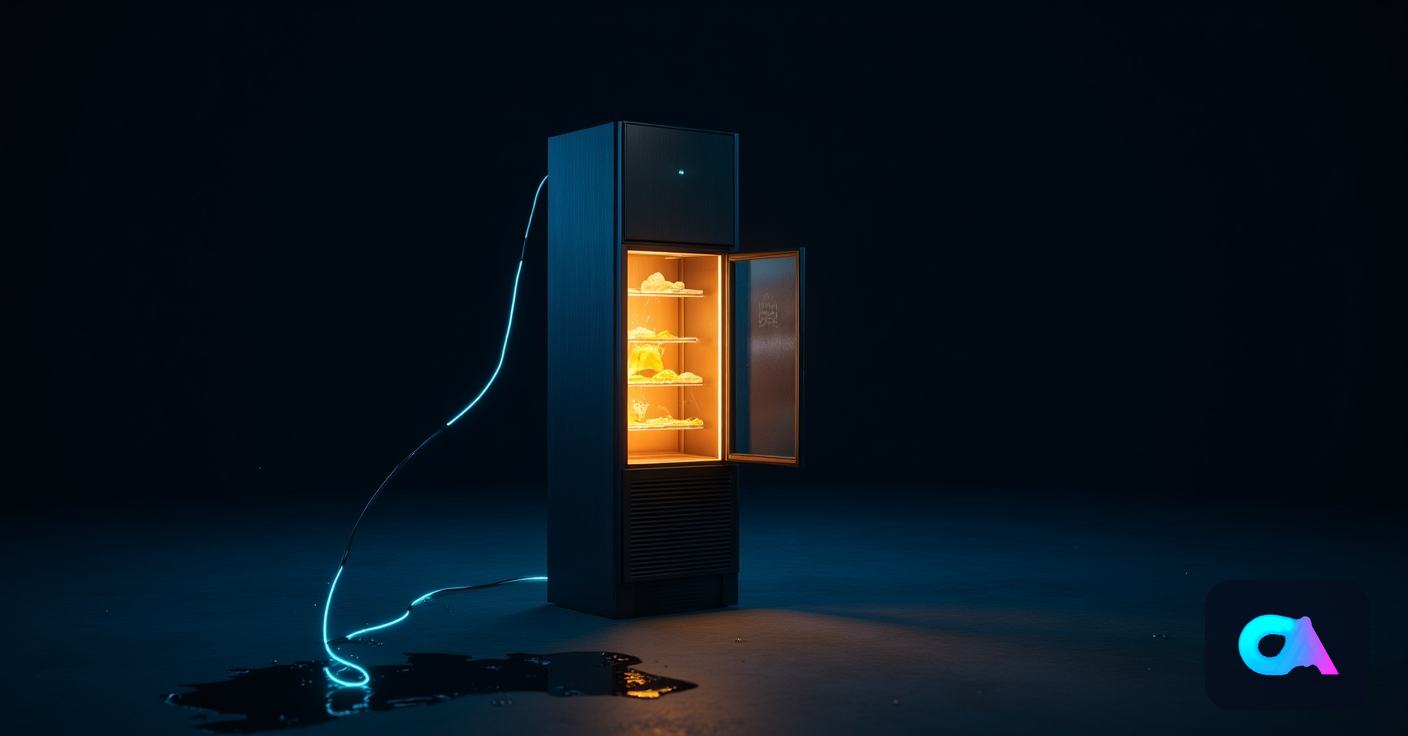
Hackers push fridges in hundreds of supermarkets to 50 °C: every machine you connect to automate is a way in
On Sunday night, a cyberattack drove the temperature of fridges in hundreds of French supermarkets up to 50 °C, causing fires and food losses, according to the Paris prosecutor's office, which described a large-scale attack "affecting connected refrigerators" at several major food retailers. Les Mousquetaires, which owns Intermarché, said about 150 stores were hit, with fridges heated to 50 °C for six hours, and that it had thrown away all the fresh and frozen food; Coopérative U was also hit, and so was E.Leclerc, according to BFM TV. According to a government source, France's national cybersecurity agency, ANSSI, has identified a vulnerability in software supplied by Danfoss, one of Europe's biggest makers of refrigeration controls. Danfoss says a limited number of systems were affected, that they "were running outdated firmware" and that it had long advised customers to keep systems updated and replace legacy ones. On Monday, IonQ also announced a deal to buy Elisity, a company that specializes in walling off devices inside a network so an attack can't jump from one to the next, for up to $1.3 billion in stock. For your business: the victims weren't tech companies but grocery stores, so if you have connected cold rooms, HVAC, alarms or scales, this is about you. Do three things today. List which of your machines are connected to the internet and who can access them remotely (usually the maintenance contractor). Write into the contract who updates their software and how often, as we suggested with patching deadlines, and what happens to equipment that's no longer supported. And keep the machines on a separate network from your computers and your customer Wi-Fi, with a temperature alarm that doesn't depend on the same system. A connected machine nobody updates isn't INTEGRATED: it's an open door. Source
Amazon in talks to pay $7 billion for Decart as Microsoft moves Copilot to its own chip: AI is getting cheaper under the hood, so don't lock in a three-year price
Amazon is in talks to buy Israeli startup Decart for about $7 billion, according to The Wall Street Journal, in a deal that could close within days unless another suitor emerges; last month Anthropic walked away from a roughly $6 billion deal after looking into the company. Decart, valued at $4 billion in May, builds models that generate 3D worlds and, more importantly, software that tunes an AI model for a specific chip in a couple of weeks rather than months, so it can be moved to whichever processor is cheapest or most available. On Monday, Microsoft said its in-house chip, Maia 200, is already serving Microsoft Copilot and is being rolled out across the United States, Europe and Australia, delivering up to 1.7 times more tokens per watt than leading GPU infrastructure for Teams, Copilot and Cowork, and that Maia 300 will arrive in 2027 with an expected 40% more tokens per megawatt. Both giants are after the same thing: making AI cheaper to serve and relying less on a single chipmaker. For your business: the price of a given level of AI performance has fallen roughly 13-fold a year since 2023, according to Epoch AI, but bills keep climbing because usage grows faster, as the Financial Times reports (republished by Expansión): Uber burned through its annual AI budget in four months and now caps each AI coding tool at about $1,500 a month. Sign AI contracts for one year with a price review, not three years at a fixed rate, and set a monthly cap per tool. As we saw with Claude Haiku 5.5, revisit every quarter the tasks you ruled out as too expensive: if you lock in a price, your vendor pockets the savings, not you. Source
Google now forecasts sales, promotions and holidays included, from a single query: demand forecasting is no longer a project, just a matter of having your history in a table
Google has launched a preview of TimesFM 3.0 in BigQuery, its cloud data warehouse: a 330-million-parameter Google Research model that produces forecasts with no training required, from a single SQL function. What's new is that it no longer looks only at the history of a single number: it forecasts several at once (say, sales of two product lines) and factors in what you know ahead of time, such as holidays and scheduled promotions, as well as what you only see after the fact, such as foot traffic. Google says it ranks first on the three main public leaderboards for this kind of model, and that it can also flag anomalies in a series, such as an unusual drop in sales or a spike in returns. For your business: forecasting next week's sales, and how much to order, used to be for big companies with data scientists; today what matters is having clean historical data. Put two years of daily sales by product into one table, with a column for promotions and another for holidays, and run a cheap test: forecast the last eight weeks as if you didn't know them, then compare against what you actually sold and what you ordered. If the forecast beats the way you order today, you've found where your first savings will come from. If your orders are set by someone eyeballing last year in a spreadsheet, you're still at MANUAL. Source
An app that listens all day gets to work during your meetings: decide now what it's allowed to hear at your company
Mistlabs, the company run by Peter Mo, a former executive at AI recorder maker Plaud, has taken Ambi out of beta on iPhone, Mac and Apple Watch, backed by $26 million raised in rounds led by Luminous Ventures and Chinese device maker Huaqin. The app works as a note-taker, but users can leave it listening all day so it learns from their conversations, and its agents get to work during the meeting itself: they can fact-check what's being said, compare rival products and have a proposal drafted before the meeting ends. In the coming months, it promises agents that negotiate with each other when two users are in the same meeting, and it's building a wearable; audio storage is off by default. For your business: the recorder is no longer sitting on the table; it's on the phone and watch of anyone on your team, and what it hears is the personal data of your customers and colleagues. Write a short policy: which apps may listen in on work meetings, that people are told at the start whenever customers or suppliers are present, and that they're never used in job interviews or in conversations about staff or health. And before you approve one, ask where the audio is processed and whether it's used for training. As we reported yesterday about robots that learn by watching people work, what gets recorded at your company is worth money to others. If you don't know which apps are listening to your meetings, you're not INTEGRATED: you're exposed. Source
What to watch tomorrow
What ANSSI concludes about the Danfoss flaw, and whether victims turn up outside France: Ahold Delhaize, which owns Albert Heijn and Delhaize, has taken systems offline over a security issue in the Netherlands and Belgium, with no confirmed link to the attack. Also watch whether Amazon closes its Decart deal in the coming days, and what gets unveiled at TechCrunch Disrupt, running Tuesday through Thursday (October 13–15) in San Francisco.